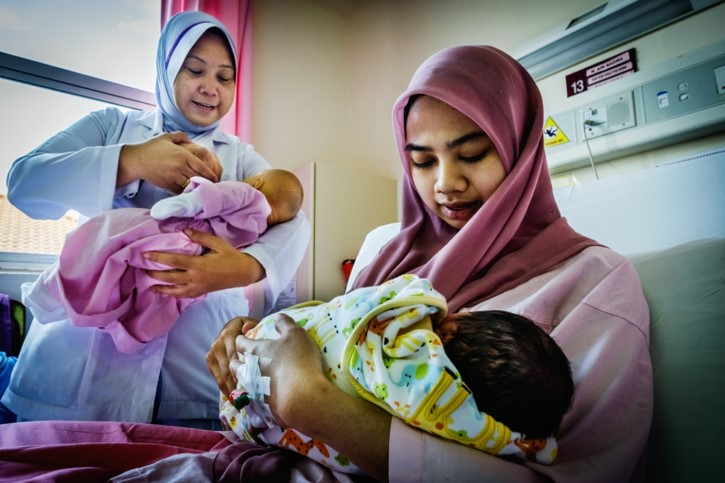
BFHI: A key component of quality maternal and newborn care
1/1
© WHO/ Yoshi Shimizu
After completing this session, participants will be able to:
1/2
Left: © UNICEF/UN041252/ Pirozzi
1/3
Right top: © UNICEF/UN0281006/ Vishwanathan
Right Bottom: © UNICEF/UN0321734/ Mejía
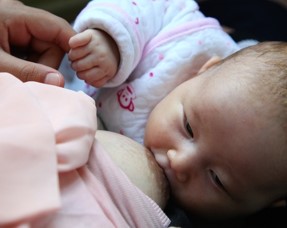
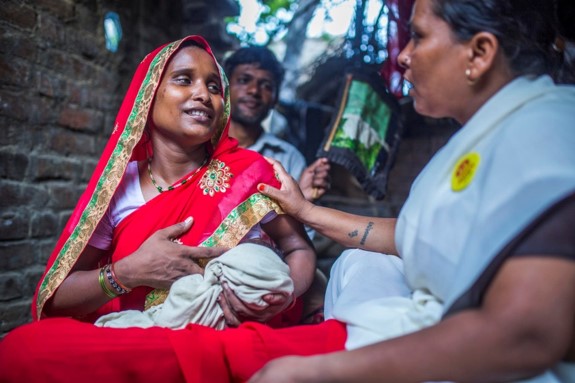
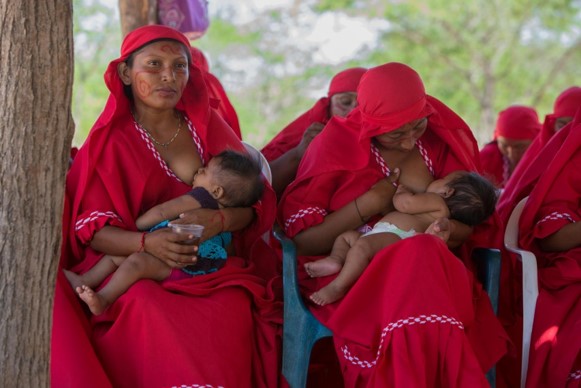
immediate and uninterrupted skin-to-skin contact from birth and initiation of breastfeeding within the first hour of life;
exclusive breastfeeding – the infant only receives breast milk, and no other foods or fluids;
breastfeeding responsively – that is, as early and often, and as long as the baby wants, day and night;
counselling mothers on the risks and use of feeding bottles, teats or pacifiers.
1/4
1/5
1a. Comply fully with the International Code of Marketing of Breast-milk Substitutes and relevant World Health Assembly Resolutions.
1b. Have a written infant feeding policy that is routinely communicated to staff and parents.
1c. Establish ongoing monitoring and data- management systems.
2. Ensure that staff have sufficient knowledge, competence and skills to support breastfeeding.
1/6
3. Discuss the importance and management of breastfeeding with pregnant women and their families.
4. Facilitate immediate and uninterrupted skin-to- skin contact and support mothers to initiate breastfeeding as soon as possible after birth.
5. Support mothers to initiate and maintain breastfeeding and manage common difficulties.
6. Do not provide breastfed newborns any food or fluids other than breast milk, unless medically indicated.
1/7
7. Enable mothers and their infants to remain together, and to practice rooming-in 24 hours per day.
8. Support mothers to recognize and respond to their infants’ cues for feeding.
9. Counsel mothers on the use and risks of feeding bottles, teats and pacifiers.
10. Coordinate discharge so that parents and their infants have timely access to ongoing support and care.
1/8
Structure
22 hours
3 days
Lecture, hands-on practice Clinical sessions
Expectations
Knowledge + Practice
Interaction
Problem-solving
1/9
© WHO/ Yoshi Shimizu
Global Breastfeeding Scorecard
Please find your country’s information
https://www.who.int/publications/i/item/WHO-NMH-NHD-19.22
Discussion questions
What did you learn about your own country’s situation?
How does this reflect your local context?
What are areas of success?
What are areas of improvement?
1/10
Breastfeeding rates
Early initiation in < 1 hour
Exclusive: 0-6 months
Continued at 1 year
Continued at 2 years
1/11
Enabling environment and reporting:
Please include information from the listed topics on the Breastfeeding Scorecard for your country.
1/12
| Topic | Your country’s data |
|---|---|
| Donor funding per live birth (USD) | |
| Legal status of the Code | |
| Compliance with C183 and R191 | |
| % births in Baby Friendly Hospitals and Maternity Centres | |
| % Primary health care facilities with individual IYCF counselling | |
| % districts implementing community programs | |
| Most recent Exclusive BF report | |
| Most recent WBTi Breastfeeding program assessment |
Resources
Global Breastfeeding Scorecard
https://www.who.int/publications/i/item/WHO-NMH-NHD-19.22
WBTi
http://worldbreastfeedingtrends.org/
1/13